KGB: what it was, how it trained its spies, its elite units and its most famous cases
Updated October 2026 · Volkov Protocol
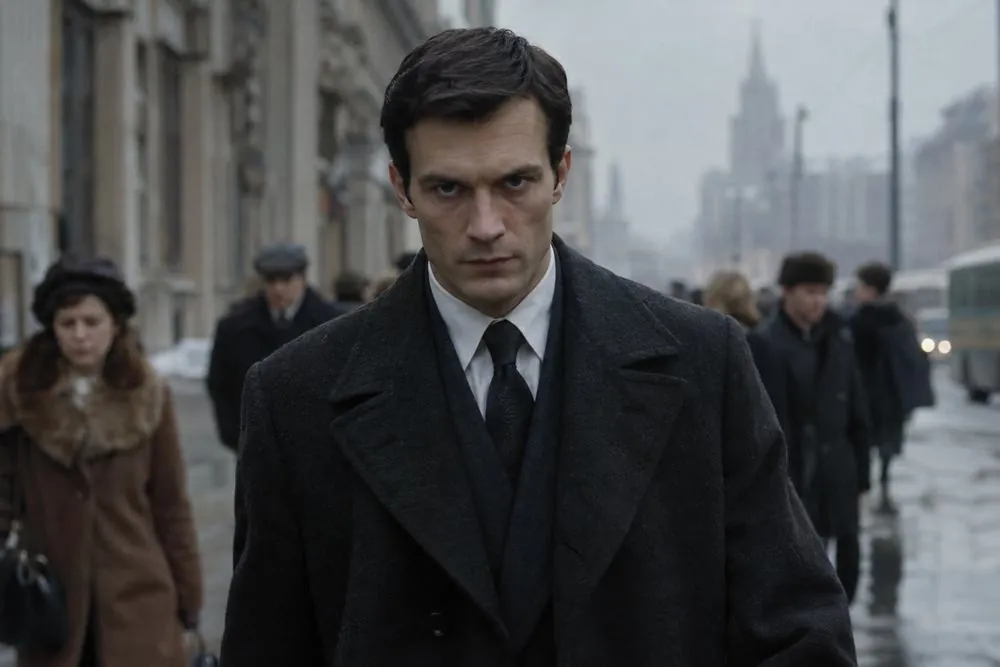
The KGB was the Soviet Union's Committee for State Security, its spy service and secret police from 1954 to 1991. It ran spies abroad, hunted them at home, guarded the leaders and the borders, and had its own elite units, Alpha and Vympel. Its best spies took years to make: language, a false life story and tradecraft.
What was the KGB?
Created on 13 March 1954 (Presidential Library of Russia), the KGB divided its work among directorates. The First Chief Directorate ran foreign intelligence, the Second counter-intelligence at home, the Fifth, from 1967, fought political dissent, and the Ninth guarded the leaders. Western estimates of its staff reached 700,000 in 1986 (Library of Congress, 1989). Inside the First Chief Directorate, Directorate S ran the illegals, officers living abroad under false identities (GlobalSecurity).
How were KGB agents and illegals trained?
Foreign intelligence officers trained at the Red Banner Institute, a closed school in the forest outside Moscow, where students knew each other only by code names (Christian Science Monitor, 1994). Illegals went further. A CIA review of Shaun Walker's 2025 history of the programme describes candidates chosen from universities and the military, then years in secret Moscow flats: one-to-one language lessons, Morse code, eliciting information, sometimes an arranged marriage to another officer (CIA, 2025). Each needed a legend, a false life story, backed by fake documents (CIA, 2025).
Did the KGB have its own elite soldiers?
Yes. Most of its men in uniform were Border Troops, under the KGB from 1957 (Presidential Library of Russia): about 230,000 in 1989, guarding nearly 63,000 kilometres of frontier, with officers trained at higher border command schools (Library of Congress, 1989). Group Alpha was created on 29 July 1974 on the initiative of KGB chairman Yuri Andropov, for counter-terrorism and hostage rescue. Its first big operation: storming the Afghan leader's palace in Kabul in December 1979. Vympel followed in August 1981 under Directorate S, built for direct action against NATO and other targets abroad, and at first it took only officers (GlobalSecurity; Library of Congress, 1989). Both units now serve in the FSB's Special Purpose Centre, created in 1998.
Who were Oleg Gordievsky and Jack Barsky?
Oleg Gordievsky, a KGB colonel, was recruited by MI6 in Copenhagen in 1974 (RFE/RL, 2015). He warned London how much the Kremlin feared a Western nuclear strike in 1983. In 1985, about to take over the KGB station in London, he was recalled to Moscow and interrogated. That July, MI6 smuggled him into Finland in the boot of a car. He died in England in March 2025, aged 86 (Boston Globe, 2025). Jack Barsky was born Albrecht Dittrich in East Germany in 1949 (Smithsonian, 2017). A KGB illegal, he reached the United States in 1978 and took the name of an American boy who had died at 10 (CBS News, 2015; CBC). About ten years later the KGB ordered him home. He stayed. The FBI caught up with him, but he was never jailed and became a US citizen. His memoir, Deep Undercover (2017), tells his side.
What is the Mitrokhin archive?
Vasili Mitrokhin was an archivist in the First Chief Directorate. From 1972 until he retired in 1984, he copied secret files by hand and smuggled his notes out. In 1992 British intelligence brought him, his family and his archive to Britain (Churchill Archives Centre). The FBI called it "the most complete and extensive intelligence ever received from any source". It became books written with the historian Christopher Andrew, the first in 1999, and the papers opened to the public in Cambridge in 2014.
Does the KGB still exist?
No. KGB chairman Vladimir Kryuchkov helped lead the failed coup of August 1991 and was arrested (GlobalSecurity). A law signed on 3 December 1991 abolished the KGB (Presidential Library of Russia). Its parts lived on. Foreign intelligence became the SVR, made independent on 18 December 1991. Security at home, renamed several times, became the FSB in 1995 (Britannica). The border guards joined the FSB in 2003.
The protocol of Volkov’s spies
The KGB built its people slowly, with discipline first. Colonel Volkov’s protocol holds the training for beginners and advanced trainees, done at home without a gym.
Safety
Heart problems, high blood pressure or joint pain: see a doctor before you start. This article is educational and does not replace medical advice.
The protocol the KGB banned
Volkov explains how to do it, science confirms it.
See the protocol